Oil Finish vs Film Finish
Penetrating oils vs surface-building coatings — two fundamentally different philosophies of wood protection that affect look, feel, durability, and repairability
Quick Comparison
| Property | Oil / Penetrating Finish | Film Finish |
|---|---|---|
| How It Works | Soaks into wood fibers, cures inside | Sits on the surface as a protective layer |
| Products | Danish oil, tung oil, linseed oil, hard wax oil | Polyurethane, lacquer, shellac, varnish |
| Water Protection | Moderate — resists splashes, not standing water | Excellent — waterproof barrier when intact |
| Heat Protection | Low — hot pots leave marks | Good — resists marks up to 200°F+ (poly) |
| Appearance | Natural, matte, "no finish" look | Visible coating, satin to high gloss |
| Touch | You feel the wood — texture, grain, warmth | You feel the finish — smooth, slightly plastic |
| Application | Wipe on, wait, wipe off — foolproof | Brush or spray — technique matters |
| Repair | Spot-repair by adding more oil to damaged area | Must sand down and recoat entire surface |
| Maintenance | Re-oil every 1-2 years on high-use surfaces | Lasts 5-10+ years before refinishing needed |
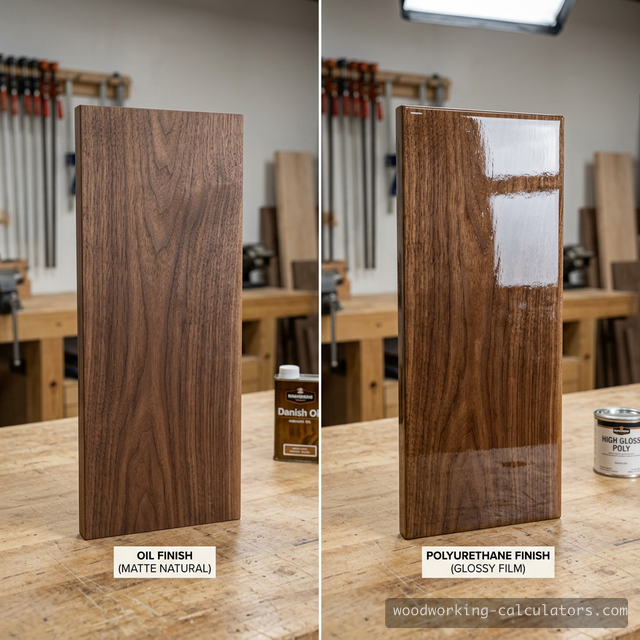
How They Work
Oil Finishes (Penetrating)
Oil finishes soak into the wood's pore structure and cure (polymerize) within the fibers themselves. Drying oils like tung oil and linseed oil undergo a chemical reaction with oxygen, hardening inside the wood to create water resistance from within. Danish oil blends oil with varnish resin for slightly more surface protection while maintaining a hand-rubbed look.
The result: the wood IS the surface. You see the wood, touch the wood, and feel the wood's natural texture and warmth. There is no discernible coating. This is why oil finishes are beloved by hand-tool woodworkers and furniture makers who want their material to speak.
Film Finishes (Surface-Building)
Film finishes sit on top of the wood surface as a distinct layer. Polyurethane forms a plastic-like barrier; lacquer builds a hard, thin shell; shellac creates a warm, resinous coat. Multiple coats build thickness — typically 3-5 mils (thousandths of an inch) for a durable finish.
The result: you see the wood THROUGH the finish, like looking through a window. The finish itself is the wearing surface — it takes the abuse, protecting the wood underneath. This is why film finishes are the professional choice for kitchen tables, floors, and commercial furniture.
Durability
Film finishes win on raw protective power. The numbers:
- Polyurethane: Withstands daily use on dining tables for 5-10 years before showing wear. Resists water rings, moderate heat, and alcohol. The toughest consumer finish available.
- Lacquer: Professional-grade hardness. Resists scratches better than polyurethane. Standard finish for commercial cabinets and office furniture. Professional application required (spray only).
- Danish oil: Protects against fingerprints and light moisture but shows water rings from wet glasses in 30-60 minutes. A coffee mug left on an oiled table leaves a mark. Must be re-applied every 6-24 months on high-use surfaces.
- Hard wax oil (Rubio Monocoat, Osmo): The premium oil option. More water-resistant than traditional oil alone, easier to spot-repair. A single coat provides serviceable protection. $50-80 per liter but coverage is excellent.
The trade-off: Film finishes protect better but fail catastrophically. A deep scratch or chip exposes bare wood and looks terrible — full refinish required. Oil finishes degrade gracefully. Scratches blend in because there is no film to break. Spot repair is instant — wipe on more oil.
Appearance & Feel
This is where oil finishes win decisively for many woodworkers:
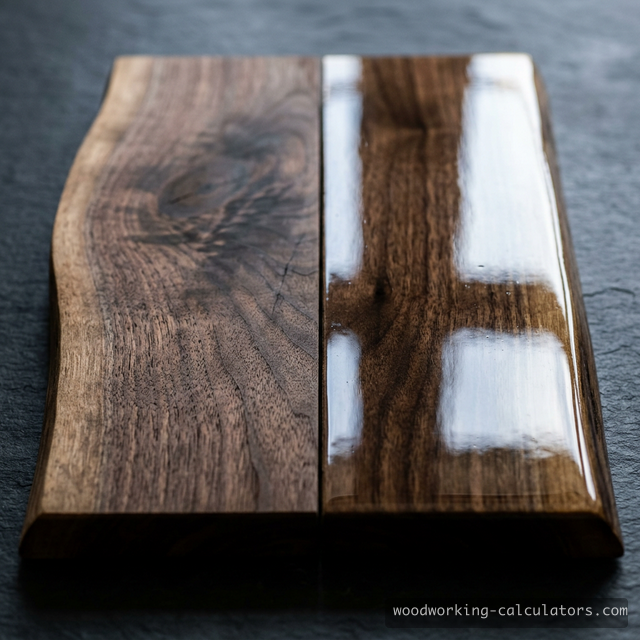
- Visual depth: Oil finishes enhance grain without adding a visible layer. Walnut under oil looks like walnut — rich, deep, natural. Walnut under polyurethane looks coated — the grain is visible but through a plastic window.
- Tactile quality: Oil-finished surfaces feel like wood — you can feel the grain texture, the warmth, the life of the material. Film-finished surfaces feel like the finish — smooth, uniform, slightly cold and synthetic.
- Aging: Oil-finished wood ages gracefully, developing a natural patina. Film finishes yellow (oil-based poly), crack (lacquer), or cloud (shellac with moisture exposure) as they age.
The exception: Water-based polyurethane stays crystal clear and does not yellow. It is best for preserving the light color of maple and ash. Oil finishes amber these species over time.
Application & Repair
Oil Finishes: Foolproof Application
- Sand to 180-220 grit
- Flood the surface with oil using a rag or brush
- Wait 15-30 minutes for absorption
- Wipe off ALL excess (critical — excess oil dries sticky)
- Repeat 2-3 coats with light sanding between
No brush marks, no drips, no dust nibs, no orange peel. The lowest skill-barrier finish in woodworking. A complete beginner produces a professional result on the first try.
Film Finishes: Technique Required
Brushing polyurethane requires managing drips, brush marks, dust contamination, and inter-coat adhesion. Spraying lacquer requires equipment ($200-500), ventilation, and practice to avoid runs and orange peel. Between coats: sand with 220-320 grit, remove all dust, and apply in a clean environment.
Repair comparison: A scratch in an oil finish? Wipe on more oil, done in 60 seconds. A scratch in polyurethane? Sand the affected area, feather the edges, recoat, hope the sheen matches. Major damage requires stripping and refinishing the entire surface.
Verdict
| Project | Best Finish | Why |
|---|---|---|
| Fine furniture (showcase) | Oil | Natural beauty, tactile quality, ages gracefully |
| Dining table (daily use) | Film (polyurethane) | Water rings, heat marks, and spill resistance |
| Kitchen cabinets | Film (lacquer or poly) | Grease, moisture, and cleaning chemical resistance |
| Cutting boards | Oil (mineral/wax) | Food-safe, renewable, tolerates knife cuts |
| Outdoor furniture | Oil (marine or exterior) | Easy to recoat yearly, wood breathes |
| Walnut display piece | Oil | Nothing shows walnut better than a hand-rubbed oil |
| Kids' furniture | Film (water-based poly) | Juice spills, crayon, and abuse resistance |
| Floor | Film (polyurethane) | Foot traffic demands maximum surface hardness |
Recommended Calculators
Wood Finish Calculator
Coverage rates differ: oil finishes cover 200-300 sq ft/L; polyurethane covers 350-450 sq ft/qt. Calculate for your project.
Stain Coverage Calculator
Staining before finishing? Coverage depends on species porosity and whether you are topping with oil or film.
Drying Time Calculator
Oil finishes cure in 24-72 hours per coat; polyurethane in 4-24 hours. Temperature and humidity change these dramatically.
Sandpaper Calculator
Oil finishes need sanding to 180-220 grit; film finishes to 220+ plus inter-coat sanding at 320. Plan your sandpaper needs.
Project Cost Calculator
Compare total finishing costs: oil finishes cost less in material but need periodic maintenance. Film finishes cost more upfront but last longer.