Outdoor & Deck Woodworking Projects
Build for the weather — species selection, structural calculations, corrosion-proof hardware, and weatherproofing tools for decks, furniture, and outdoor structures that last decades
Planning Workflow
Follow these steps with the right calculators at each stage
Select Weather-Resistant Species
Outdoor wood selection is fundamentally different from indoor — rot resistance and weather durability matter more than grain beauty. Three categories to know: naturally rot-resistant species (western red cedar lasts 15-20 years above ground, white oak 15-25 years, ipe/teak 25-40+ years), pressure-treated lumber (rated for ground contact, cheapest at $1-2/LF but requires regular sealing), and composite/PVC (zero maintenance but higher upfront cost at $4-10/LF). Compare density and weight: an ipe deck weighs nearly double a cedar deck — factor this into structure design. Check local availability — not all species are stocked at every yard.
Calculate Structural Requirements
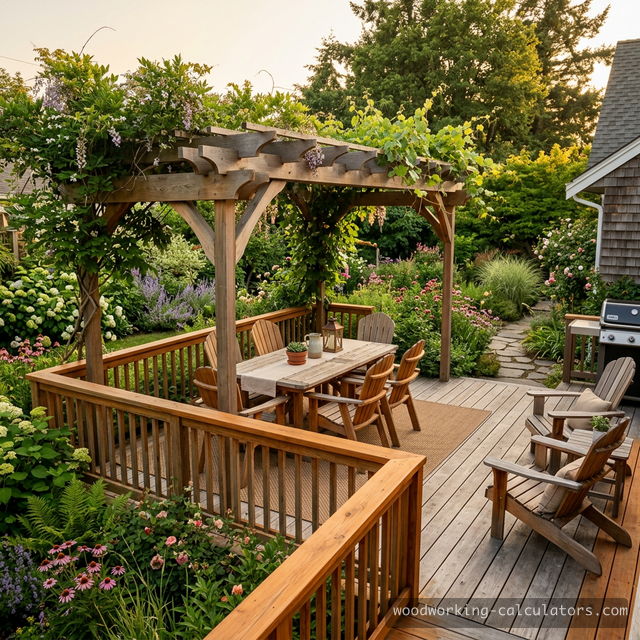
Outdoor structures must handle people, furniture, snow loads, and wind. For decks: 2x8 joists at 16-inch on-center span up to 10-12 feet; 2x10 joists reach 12-14 feet. Switch to 12-inch spacing for diagonal decking patterns, heavy tile overlays, or hot tubs. Ledger boards need lag bolt spacing every 16 inches and must be properly flashed to prevent house wall rot — the most common deck failure point. For pergola rafters, 2x6 cedar spans about 8 feet between posts, 2x8 reaches 10-12 feet. Calculate total board feet with 10% waste: a 12x16 foot deck with framing, decking, and railings typically needs 350-500 BF of lumber.
Plan Corrosion-Resistant Hardware
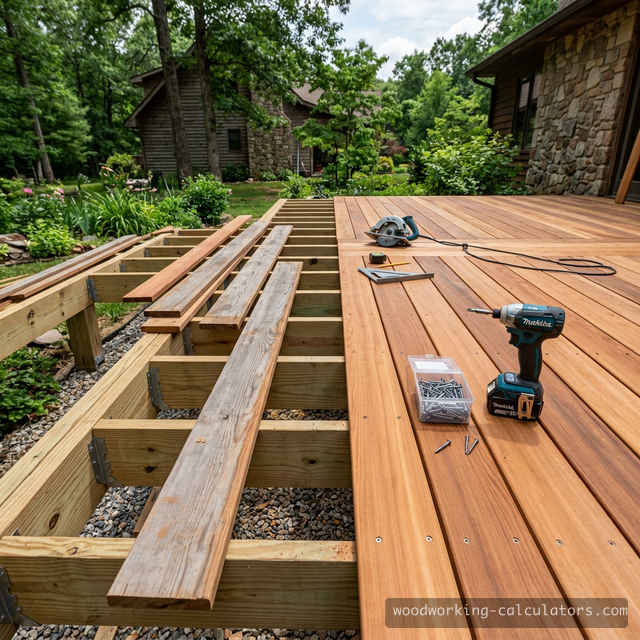
This is where outdoor projects fail silently — the wrong fasteners corrode inside the wood where you cannot see them until the structure weakens. For pressure-treated lumber (ACQ or CA-C treatments contain copper), you MUST use hot-dipped galvanized, stainless steel, or approved coated screws — standard zinc-plated screws dissolve within 2-3 years from the copper's galvanic reaction. For cedar and redwood, stainless steel prevents black tannin staining that standard fasteners cause. Budget for it: stainless steel deck screws cost $40-60 per 1,000 vs $15-25 for standard. A 200 sq ft deck needs roughly 1,000-1,500 screws plus joist hangers, post brackets, and ledger lag bolts.
Plan Weatherproofing & UV Protection
Every outdoor wood surface needs protection from UV degradation and moisture cycling. Two finish categories: penetrating oils/stains soak into the wood and are easy to reapply every 1-2 years (no scraping or sanding needed), while film-forming finishes (polyurethane, spar varnish) create a harder shell lasting 2-4 years but peel badly when they eventually fail, requiring complete stripping. For decks, penetrating stains are almost always the better choice. Calculate coverage carefully: rough-sawn or textured surfaces absorb 30-40% more finish than smooth-planed stock. A 200 sq ft deck with railings has approximately 350-400 sq ft of surface area (tops, sides, rail balusters) — plan for 2 coats of penetrating stain.
Build Your Outdoor Budget
Outdoor materials cost 20-50% more than indoor equivalents, and most beginner builders are shocked by the total. Material cost benchmarks: cedar decking at $3-6/LF, composite $4-10/LF, ipe $8-15/LF, pressure-treated framing $0.50-1.50/LF. A 200 sq ft cedar deck typically runs $1,500-3,000 in materials (framing, decking, railings, hardware, stain). Ipe at the same size: $3,000-6,000. Add hardware ($200-400 for joist hangers, brackets, and stainless screws), finish ($50-100), and 10-15% contingency for waste and defects. Compare to professional installation at $30-60/sq ft ($6,000-12,000 for the same 200 sq ft deck) — the DIY savings are substantial.
All Related Calculators
Wood Density Calculator
Compare outdoor species by density, weight, and hardness. An ipe deck weighs nearly double a cedar deck — crucial for structural design and handling logistics.
Board Feet Calculator
Calculate total lumber volume for deck framing, decking boards, railings, and posts. A 12x16 deck typically needs 350-500 BF including all components.
Moisture Content Calculator
Verify lumber moisture content before installing outdoor projects. Pressure-treated wood is often delivered wet at 30-50% MC and should dry to 15-19% before staining.
Screw & Nail Calculator
Calculate fastener quantities for decking, railing, and framing with recommendations for corrosion-resistant types matched to your wood species and treatment.
Wood Finish Calculator
Calculate exterior-grade stain and sealer for all outdoor surfaces. Accounts for rough-sawn texture that absorbs 30-40% more finish than smooth stock.
Stain Coverage Calculator
Estimate penetrating stain quantities for decks, fences, and outdoor furniture with species-specific absorption rates and multi-coat planning.
Lumber Cost Calculator
Compare material costs across outdoor species and grades. See the budget impact of choosing cedar vs composite vs ipe for your project.
Project Total Cost Calculator
Comprehensive outdoor project budget: lumber, hardware (stainless/galvanized premium), finish, and contingency. Compare DIY vs professional installation costs.
Need More Tools?
Browse our complete collection of 55+ professional woodworking calculators